Översikt
Agrikola.AI, a Catalan startup founded in 2024, develops technology to reduce the dependence of vegetable growers on chemical plant protection products. Its Wagus XS is an autonomous robot that works at night and treats fungal diseases with UV-C light, with no chemicals or heavy metals such as copper, and Nimbus is the cloud platform growers use to control the robots.
Through agrifoodTEF’s Spanish node, the Universitat de Lleida (UdL), together with the Universitat Politècnica de Catalunya (UPC) as external validator, tested the robot in organic and conventional commercial fields in Catalonia on zucchini, lettuce and onion, and evaluated the usability of Nimbus. The independent results gave Agrikola evidence to show to growers and investors.
 Spanien
Utmaningen
Fungal diseases are a constant threat to vegetable crops, and growers, especially organic growers, have a limited set of certified products to fight them. Agrikola’s approach, UV-C light applied by an autonomous robot at night, is an alternative to chemical treatments. But a new technology only convinces growers when it is proven in real production conditions, not only in the lab.
Agrikola needed independent scientific evidence on three questions: whether the robot controls diseases as well as the grower’s own treatment, at what cost, and how the UV-C treatment should be adjusted to each crop and variety. It also needed to know whether Nimbus, used by growers and farmers to control autonomous robots, was easy to understand for people with different profiles.
AgrifoodTEF-tjänsten
agrifoodTEF Spain delivered two services through the Universitat de Lleida, with the UPC as external validator under a UdL–UPC collaboration agreement:
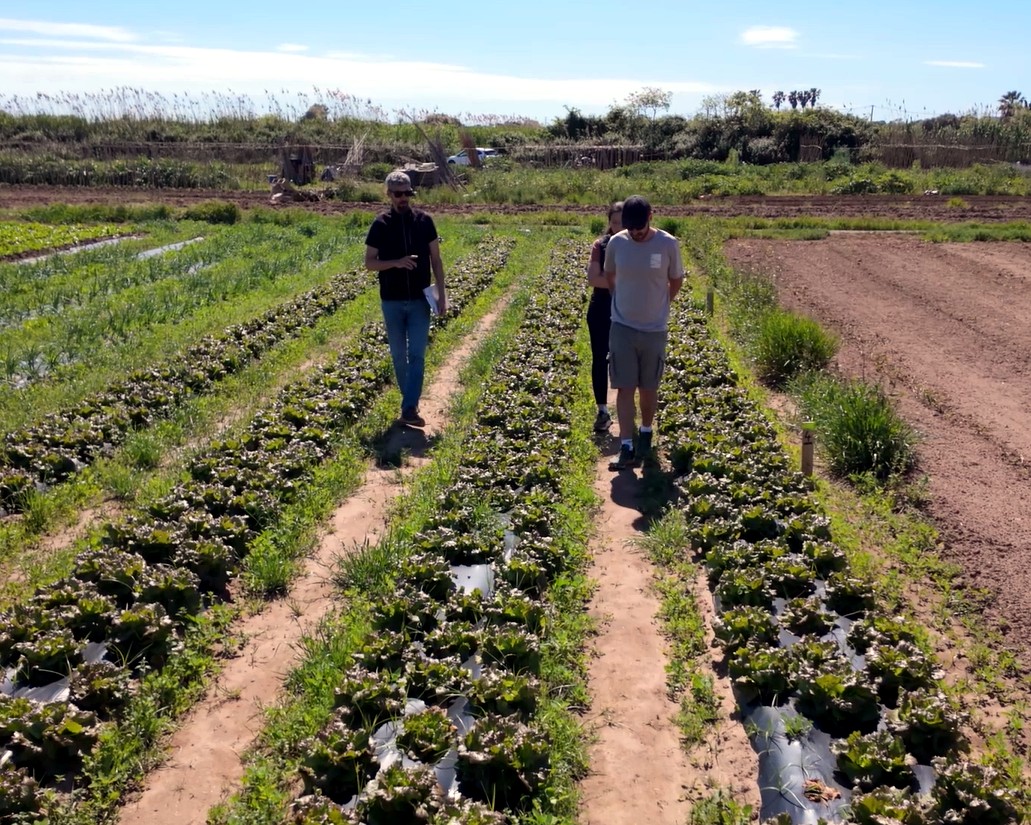
- Agronomic validation of the Wagus XS (UdL, with UPC): field trials in organic and conventional commercial fields on zucchini, lettuce and onion over two crop cycles, including trials with different varieties under high disease pressure. Each trial compared three blocks: untreated control, the grower’s own treatment and the robot. Biological efficacy was assessed in repeated evaluations following EPPO guideline PP 1/57(3), alongside the robot’s performance (coverage, navigation, working time) and an economic comparison. Testing in real conditions also covers the practical and legal side of robots working autonomously, without supervision, in open plots:
- Usability evaluation of Nimbus (UdL): a heuristic evaluation of the main platform flows, carried out by evaluators from different countries and profiles so that diverse perspectives could uncover more types of problems. Findings were prioritised for the development team:

Effekterna
The validation gave Agrikola independent, field-based evidence to support its commercial roll-out.
Technical Advancement:
- Validation across three crops (zucchini, lettuce and onion) in organic and conventional commercial fields
- Biological efficacy, robot operation and economics assessed against the treatment applied by the grower
- Insights to adjust the treatment frequency to each crop and variety
- Nimbus: a prioritised list of usability improvements for the development team
Market Impact: According to Agrikola, the validation report was very well received by investors and customers and helped the company close a funding round. Its focus is now on commercialization.
Sustainability & Scalability: The robot treats diseases at night with UV-C light, without chemicals or heavy metals, which according to Agrikola leaves crops free of plant protection product residues. agrifoodTEF’s mission is to bring AI and robotics to the agrifood sector in a way that is sustainable environmentally, socially and economically. New validations can fine-tune the protocol for other crops and growing conditions.