Overview
Within the agrifoodTEF framework, the collaboration between Institut de l’Élevage (IDELE) and ADICE shows how innovation in livestock farming can grow from the field and be strengthened through applied artificial intelligence. What started as a practical idea from a goat farmer in Ardèche gradually developed into a structured project involving technical validation, algorithm improvement and institutional support.
As both partners explain, the real value of this initiative is not just the technology itself, but the path it followed. A simple, locally built prototype was progressively transformed into a reliable, user-friendly and potentially scalable solution, while staying closely connected to everyday farming needs and constraints.
 France
- Livestock farming
The challenge
Livestock systems across Europe are currently confronted with a set of interrelated challenges that go well beyond technological lag. Generational renewal, labour shortages, economic sustainability and increasingly stringent societal expectations, particularly in terms of animal welfare and environmental responsibility, form a dense and often contradictory landscape in which farmers are required to operate.
As Jean-Philippe Goron of ADICE observes, these pressures are not abstract. They translate into very concrete constraints at farm level, where livestock farming remains, first and foremost, an economic activity with limited margins and little room for speculative investment. Any innovation, he notes, must therefore prove its relevance not only technically, but also economically.
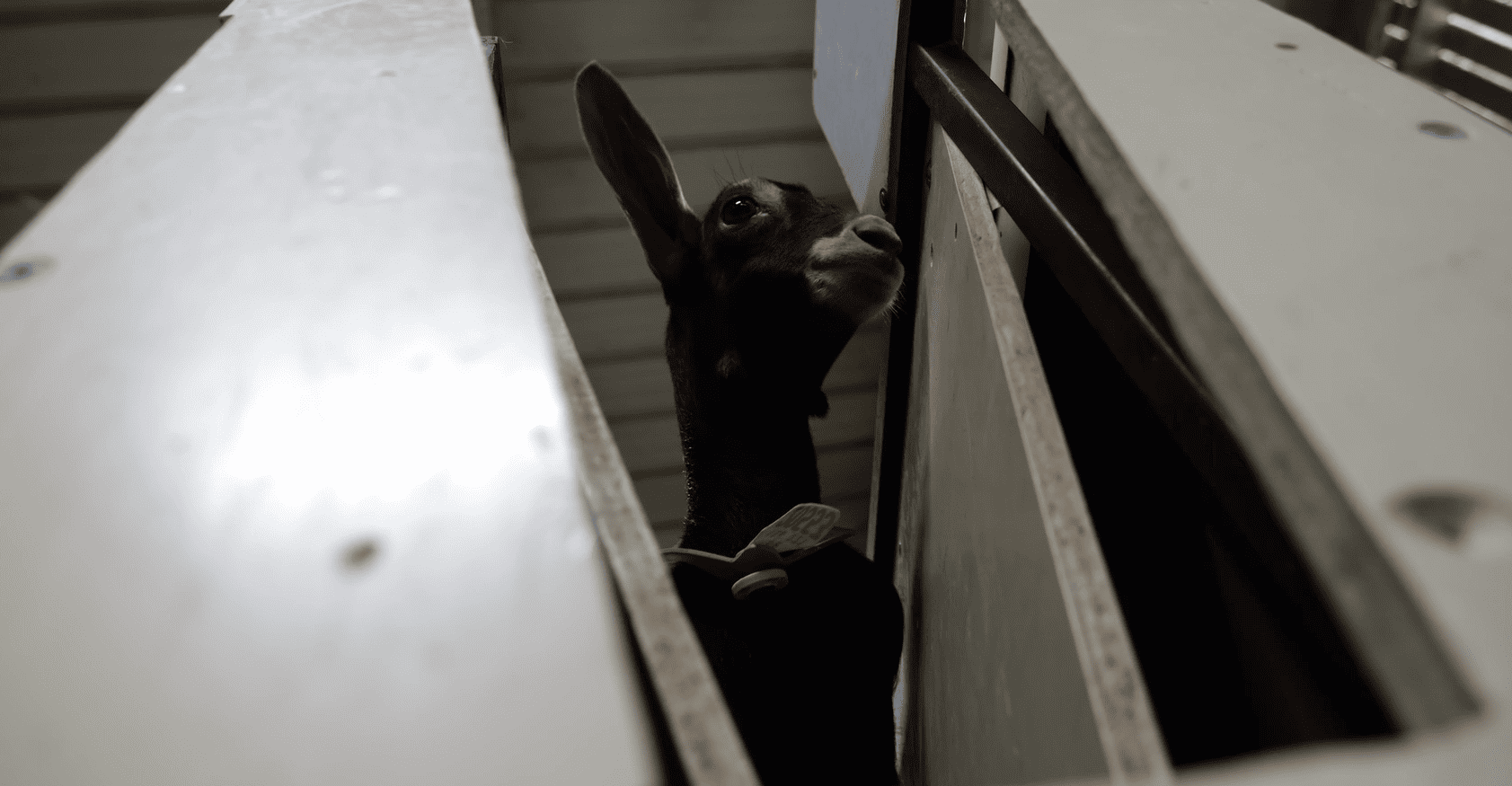
In the specific case of goat farming, the rearing of young females represents a critical phase. As Goron explains, early growth performance largely determines the animal’s future productivity. Yet regular weighing (essential to monitor this phase) remains one of the most physically demanding and time-consuming tasks on farm. Handling dozens of animals manually on a weekly or bi-weekly basis quickly becomes unsustainable, even for technically advanced holdings.
The challenge, therefore, was not merely to automate an existing practice, but to rethink it altogether: reducing physical strain, avoiding animal restraint, preserving welfare, and still delivering data that farmers can trust and actually use.
The agrifoodTEF service
The automatic weighing solution developed within agrifoodTEF emerged from a distinctly bottom-up dynamic. As Goron recalls, the original idea was proposed by a goat farmer and collectively discussed within ADICE’s breeders’ commission, before being translated into a first physical prototype built with simple, readily available materials.
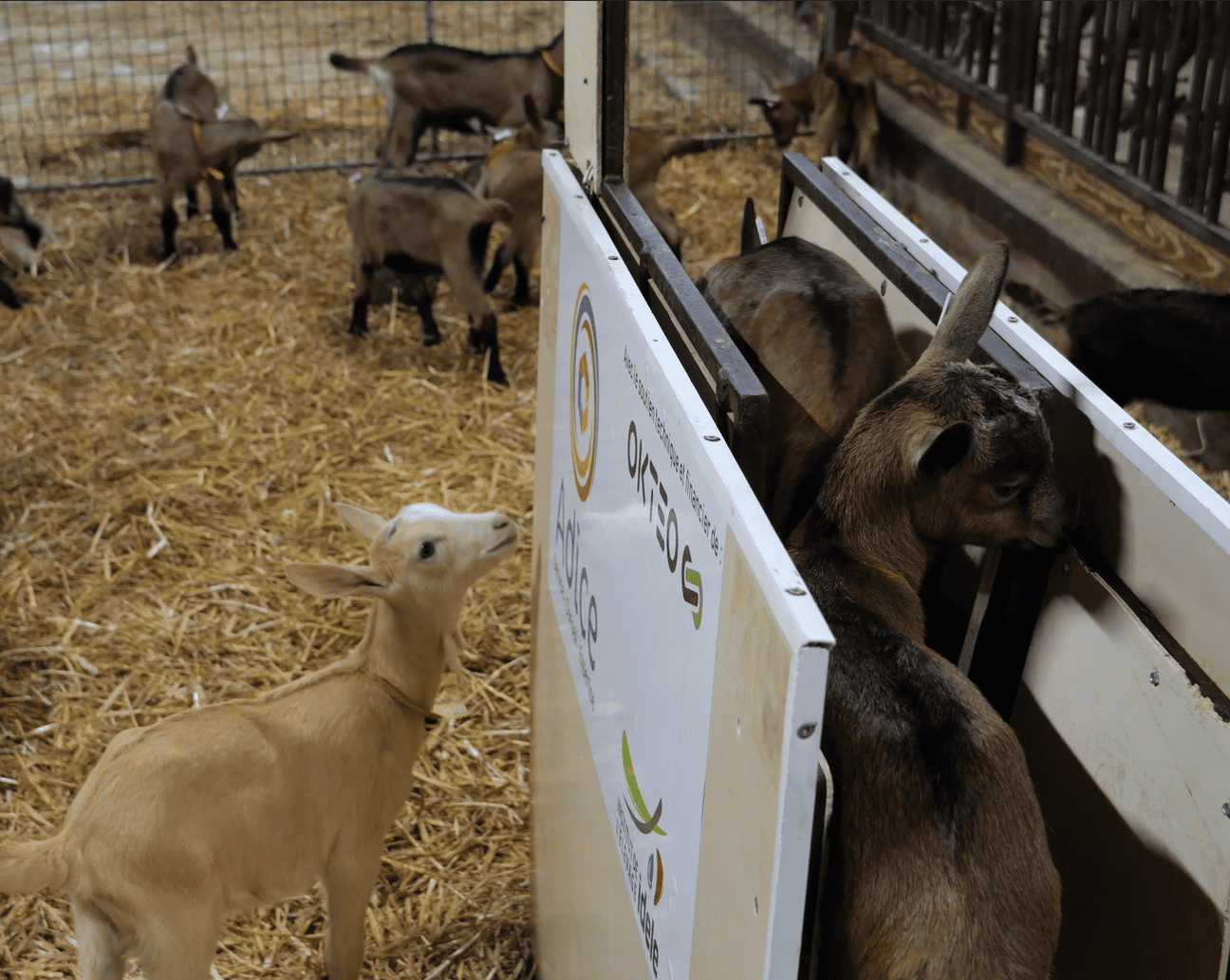
The underlying principle rests on animal behaviour. Goats, unlike other species, are naturally curious. As Goron puts it, “they climb on everything.” The system therefore leverages this curiosity by placing a walk-through weighing platform directly in the animals’ living environment, allowing them to cross it freely, without any form of contention. Each passage generates a weight measurement associated with the animal’s electronic identification.
This freedom of movement, however, also produces highly heterogeneous data. Laurence Depuille from IDELE explains that field conditions generate weights affected by multiple animals on the scale, unstable positioning, partial crossings or even negative values. Within the agrifoodTEF project, IDELE focused on developing AI-based algorithms capable of qualifying, cleaning and consolidating these raw measurements into reliable individual weights and coherent growth curves.
“The objective,” Depuille notes, “is to link very noisy field data with the farmer’s expectation: a single, accurate weight for the identified animal.” This required continuous interaction between hardware improvements and algorithmic refinement, each informing the other throughout the development process.
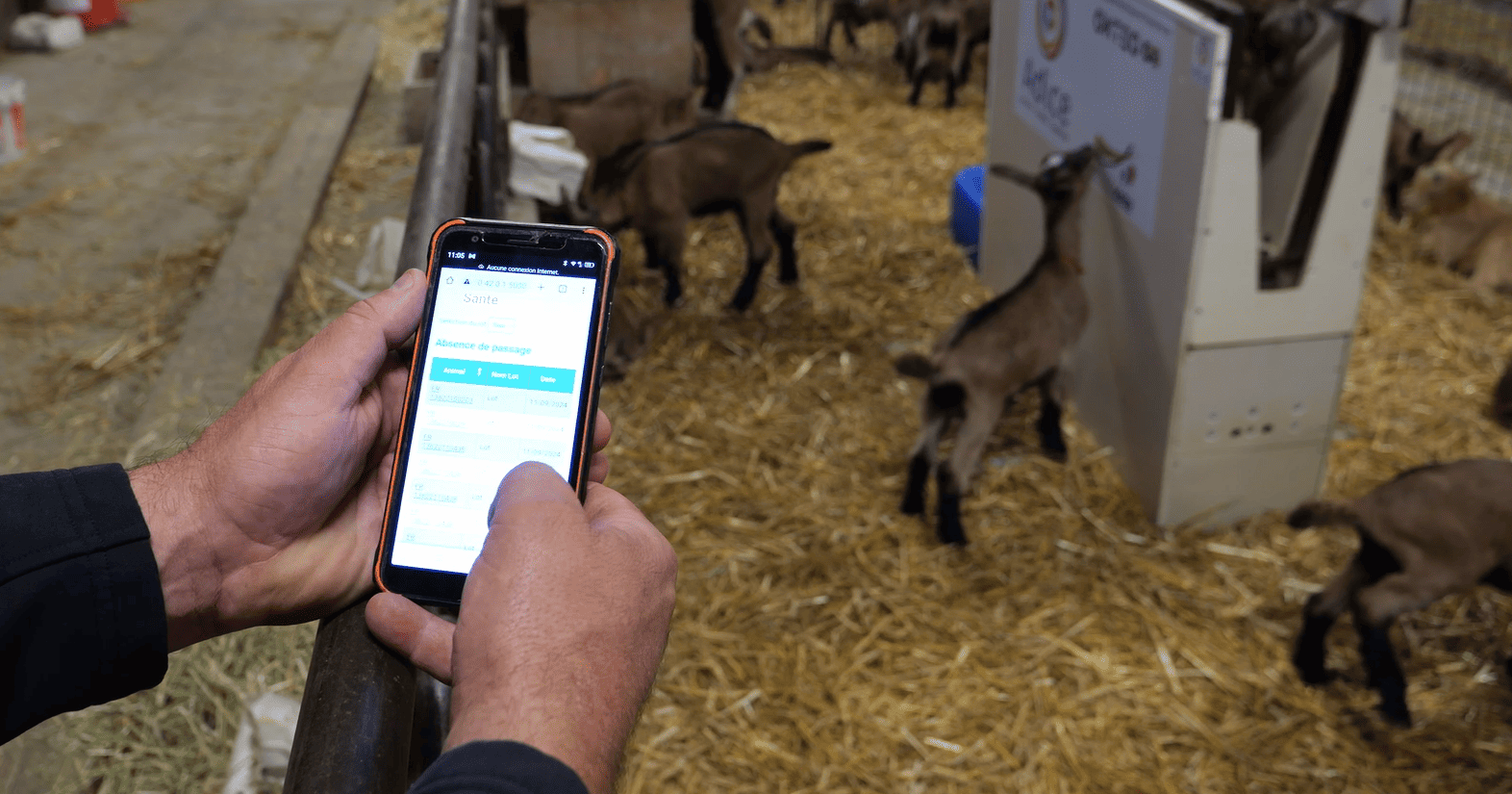
Equal attention was paid to usability. Farmers insisted on a robust, autonomous and cable-free device, resistant to animal behaviour and easy to move and maintain. On the digital side, their expectations were equally explicit: a smartphone-based interface providing intuitive access to animal lists, growth indicators, alerts and visual summaries, without forcing them to engage with complex software environments.
The impact
Beyond the development of a weighing device, the collaboration illustrates the broader role that applied AI can play when it remains firmly anchored in real farming contexts. For IDELE, the project provides access to non-experimental, field-generated datasets: a necessary condition, as Laurence Depuille points out, for building algorithms that can perform reliably outside controlled environments.
For ADICE and its member farmers, agrifoodTEF has acted as a decisive lever. Without the technical, scientific and financial resources mobilised through the project – Goron reflects – the prototype would likely have remained confined to a single farm or territory. Instead, it has gained visibility, credibility and realistic prospects for industrialisation and commercialisation.
The impact also extends beyond the caprine sector. Interest expressed by sheep farmers has already opened exploratory work on lamb weighing systems, and both partners see clear potential for adaptation to other livestock sectors and regions, albeit without assuming simple replication.
Looking ahead, both IDELE and ADICE converge on a shared vision of artificial intelligence in livestock farming. AI is not a rupture but a continuation of long-term mechanisation and automation trends, on the condition that farmers remain in control and that tools deliver a tangible return on investment. Depuille emphasises that technological development only makes sense when it leads to tools that are not only innovative, but actually used.
In this sense, agrifoodTEF-enabled collaborations between public research bodies, advisory organisations and field actors play a crucial role. They allow innovation to mature without losing its grounding, ensuring that it does not stop at the level of prototypes or experimental results, but translates into solutions that can genuinely take root in livestock farming systems.