Overview
Exobotic Technologies, a Belgian company specialised in custom AI and robotics solutions for sectors including agriculture, aerospace, construction, and logistics, received technical support and validation from agrifoodTEF through the Belgian node at ILVO (Flanders Research Institute for Agriculture, Fisheries and Food).
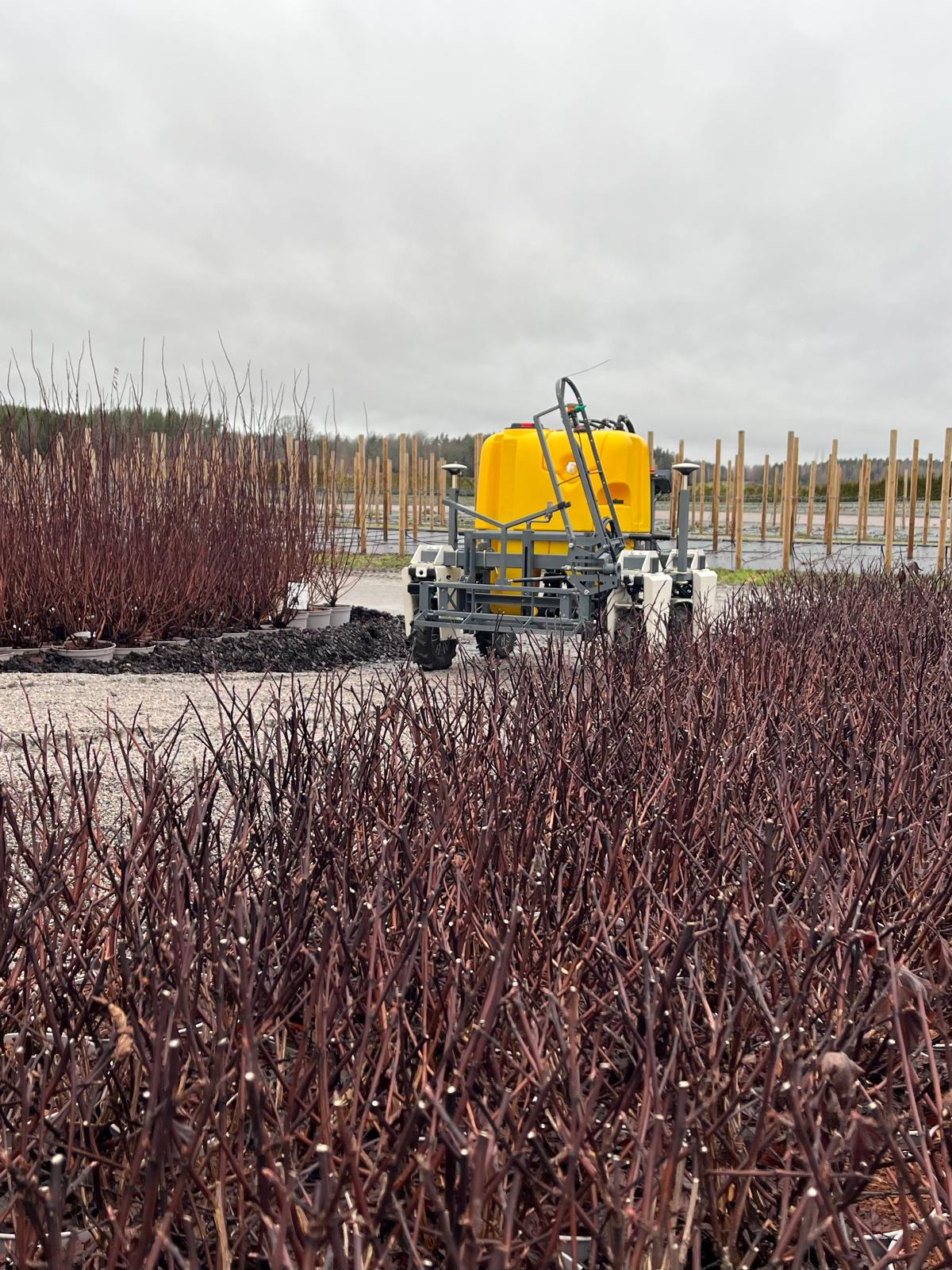
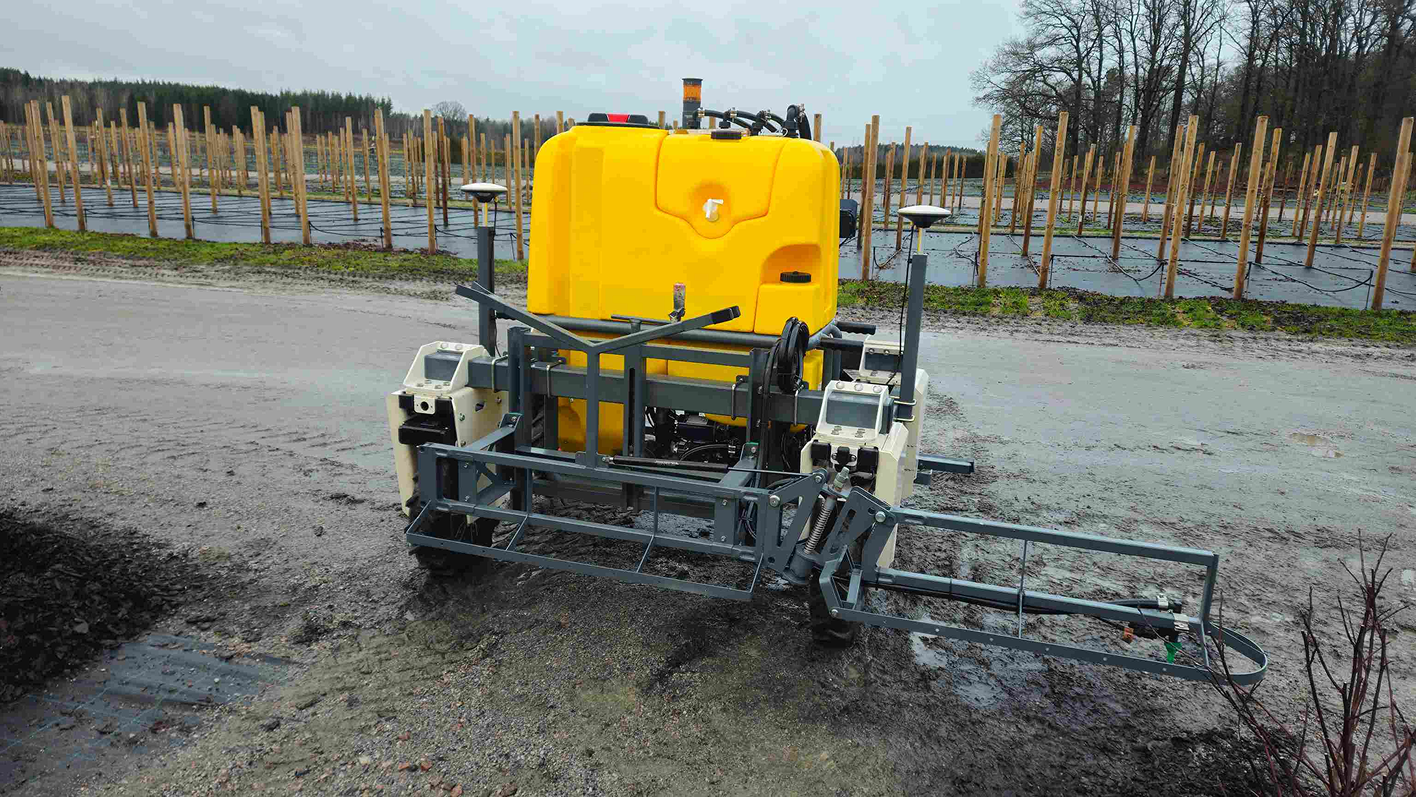
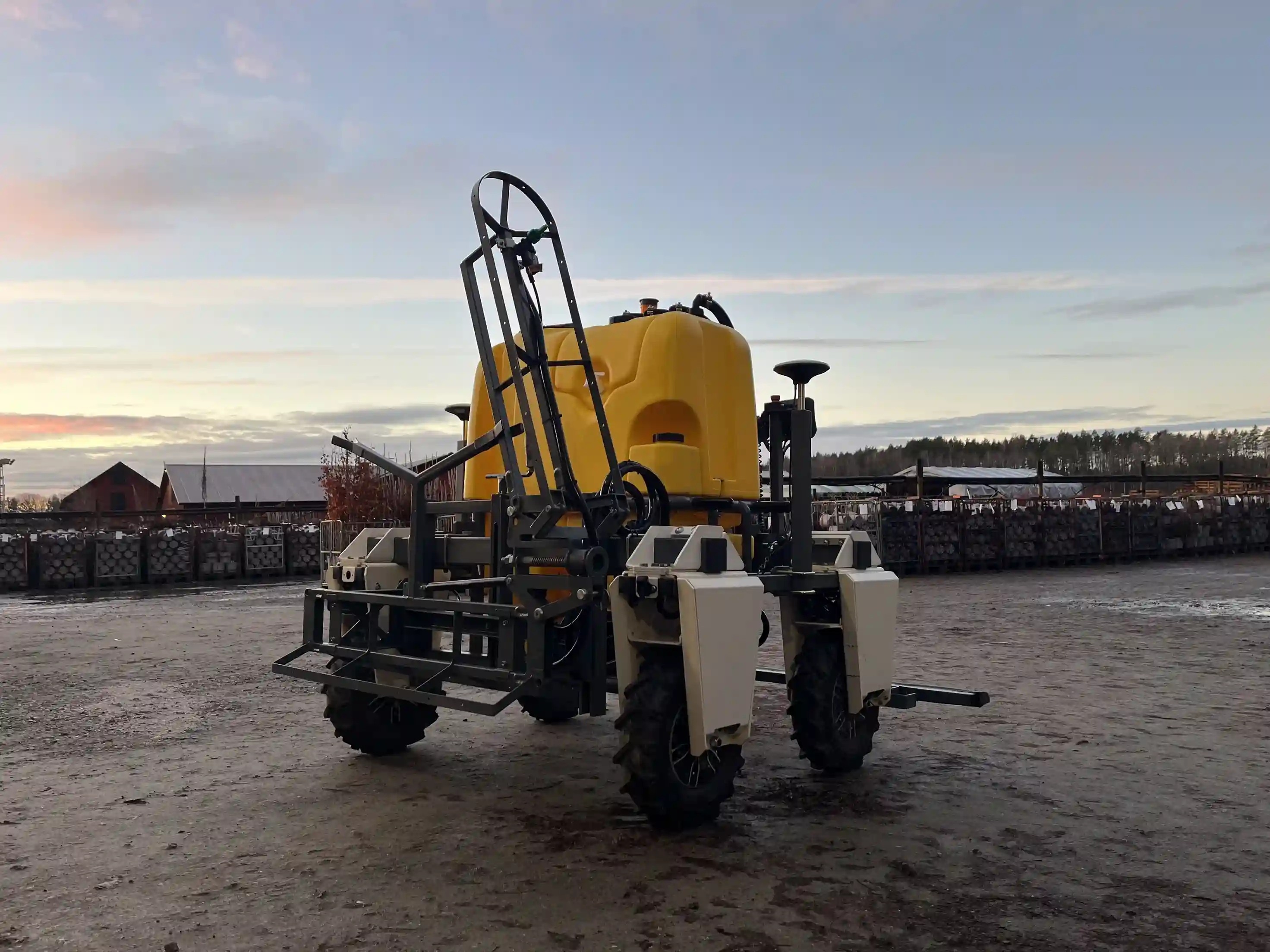
The collaboration focused on the development and verification of an autonomous robotic platform for weed management in plant nurseries, equipped with a modular precision spraying system. The solution integrates RTK-GNSS navigation and a user interface that allows route planning, mission scheduling, and real-time monitoring of operations.
ILVO provided engineering support on both the vehicle and the spraying system, conducting tests on battery capacity, powertrain efficiency, and spray performance through its accredited Spray Tech Lab. The first machine was delivered to a commercial end-user in Sweden at the end of 2025 and is scheduled to operate for autonomous border spraying from March to October 2026.
 Belgium
- Aquaculture
- Arable farming
- Forestry
- Food processing
- Greenhouse
- Horticulture
- Livestock farming
- Tree Crops
- Viticulture
The challenge
During the growing season, from March to October, plant nurseries must maintain beds, paths, and borders free from weeds to prevent contamination of plant containers. Ground covers protect the beds, and tractors with flail mowers maintain the paths, but the borders cannot be mown due to the presence of irrigation lines.
These areas require herbicide application three to four times per season, and precision is critical to avoid damaging the plants. Until now, border spraying was performed manually using handheld sprayers. For a nursery with approximately 13 kilometres of borders, a single treatment required two full-time operators for one week, which translates into six to eight weeks of full-time equivalent labour over the entire season. Scheduling such work during peak sales periods is challenging. Nurseries also face the need to reduce worker exposure to chemical herbicides and explore more sustainable alternatives, such as vinegar-based biological solutions that require more frequent applications. Exobotic Technologies developed an autonomous robotic platform capable of performing precise border spraying, reducing labour requirements and enabling safer application of both chemical and biological products.
The agrifoodTEF service
Evaluation of Crop Protection Equipment (Service ID: S00147).
Through this service, the robotic platform and its modular precision spraying system are evaluated under laboratory and field conditions. The assessment includes performance testing of spray quality, nozzle control, and application accuracy, as well as validation of efficiency and operational reliability using standardised protocols and dedicated measuring equipment.
The impact
The collaboration with agrifoodTEF and technical support from ILVO enabled verification of the platform’s features and performance. The autonomous navigation system, based on RTK-GNSS, and the precision spraying mechanism were tested to ensure centimetre-level accuracy. Battery capacity and powertrain efficiency were assessed, and the spraying system underwent performance evaluation in ILVO’s accredited Spray Tech Lab. The modular spraying boom allows adjustments of height and angle, and the system is equipped with PWM-controlled nozzles and a 200-litre ENAMA-certified tank with integrated hand- and system-washing functions. Geofences and onboard fail-safe systems provide operational safety and help protect both personnel and equipment.
Operationally, the platform is expected to save up to eight weeks of full-time labour per season, while providing a control interface for planning routes and scheduling spraying missions, alongside real-time monitoring and reporting. By reducing the need for manual handling of chemical herbicides such as glyphosate, the system improves worker safety and enables the use of biological alternatives requiring more frequent applications. The platform also supports uniform dosage control and consistent spray patterns, addressing key operational challenges in plant nurseries.
The solution is designed for scalability and replication. It allows the management of multiple robots in a single operation, and future upgrades include autonomous mowing, material transport, and towing functions. The platform serves as an operational assistant, supporting field workers in repetitive and ergonomically demanding tasks. Delivered to the first end-user and accompanied by on-site training, the autonomous robotic system offers a validated and field-tested approach to addressing labour, precision, and sustainability challenges in plant nurseries.