Overview
Microfy Systems, a Spanish company specialising in affordable AI-powered digital microscopes for the food industry, received comprehensive validation support from agrifoodTEF Spanish Node at the Universitat de Lleida (UdL) and Universidad de Córdoba (UCO).
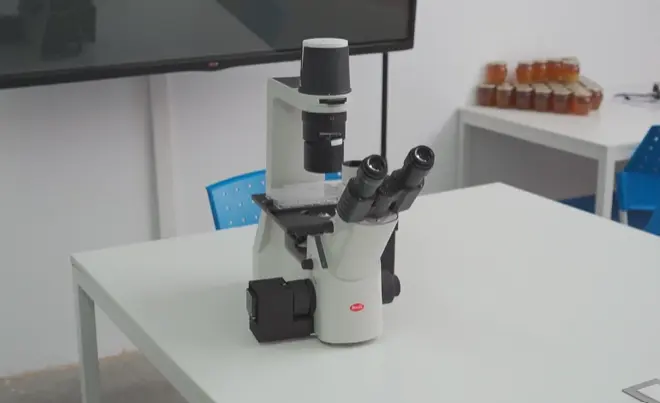
The services focused on validating two innovative solutions: Fungi.AI, an automated microscopy system for fungal growth analysis and spore counting, and Honey.AI, an intelligent microscope for automated honey quality assessment through pollen analysis. Through collaborative testing, UdL validated Fungi.AI's versatility across multiple fungal strains and culture media while also conducting User Experience (UX) evaluation, while UCO validated Honey.AI's precision in pollen and corbicular pollen analysis compared to traditional melissopalynological methods.
 Spain
Spain
- Arable farming
- Food processing
- Tree Crops
The challenge
The agrifood industry faces mounting pressure to increase production efficiency while developing sustainable alternatives like mycelium-based proteins. Traditional laboratory methods for fungal strain screening and honey quality analysis are time-consuming, labour-intensive, and require highly specialised personnel, creating critical bottlenecks in R&D and quality control.
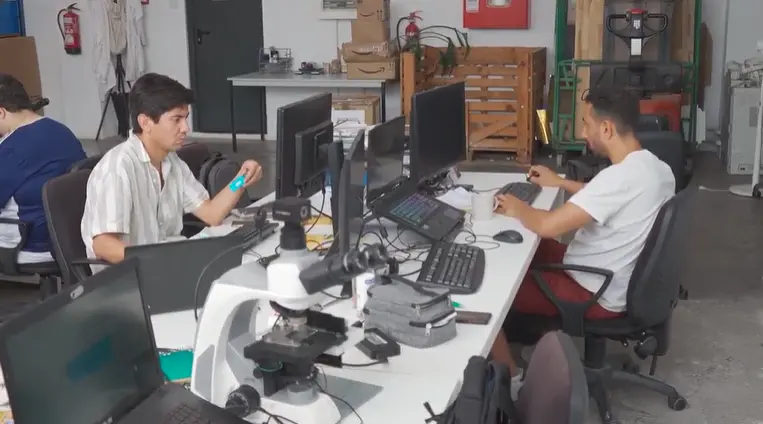
Microfy Systems needed to validate their AI-powered microscopy solutions beyond initial testing. Fungi.AI had only been tested with a single fungal strain, limiting commercial viability. They required proof of versatility across multiple species, culture media conditions, and accuracy metrics. Similarly, Honey.AI needed independent validation against traditional melissopalynological methods to demonstrate market-ready reliability and demonstrate that non-experts could achieve professional-grade results autonomously.
The agrifoodTEF service
agrifoodTEF Spanish Node delivered comprehensive validation across three services through collaborative testing between Universitat de Lleida (UdL) and Universidad de Córdoba (UCO).
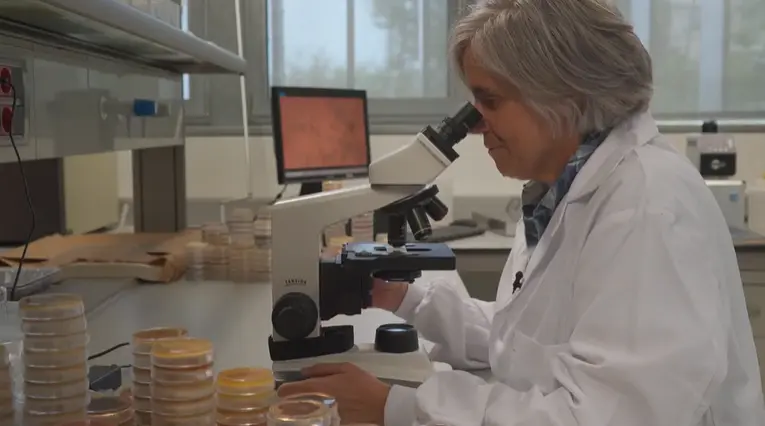
Fungi.AI Validation (UdL): UdL validated Fungi.AI's automated microscopy system across multiple fungal strains, testing spore counting and detection, growth rate analysis, and diameter measurement on standard micro-titer plates. The system combines AI-powered image analysis with cloud-based pipelines for real-time monitoring and time-lapse assessment:
Fungi.AI UX Evaluation (UdL): Parallel UX evaluation was performed using ISO/IEC 25010:2011 standards measured effectiveness, efficiency, and satisfaction, ensuring non-experts could operate the plug-and-play device autonomously.
Honey.AI Validation (UCO): UCO compared Honey.AI's AI-driven pollen analysis against traditional melissopalynological methods, establishing common protocols and validating precision in both pollen and corbicular pollen identification.
Validation of an intelligent microscope for automated honey quality analysis through pollen analysis
This multi-partner collaboration provided Microfy with technical performance metrics, usability validation, and industry-specific credibility, accelerating market readiness while demonstrating how automated microscopy integrates seamlessly into existing laboratory workflows without requiring specialised personnel.
The impact
The agrifoodTEF validation delivered transformative results for Microfy Systems:
Technical Advancement:
- Fungi.AI strain coverage expanded from 1 to multiple fungal species, dramatically increasing commercial viability
- Established definitive accuracy and repeatability metrics across diverse conditions
- Honey.AI identifies polliniferous and nectariferous species, giving the counting differences
- Honey.AI analyses the sample, selecting the geographical area of origin.
Operational Efficiency:
- Significant time savings compared to traditional manual microscopy
- Eliminated specialised expertise requirements, democratising access to advanced analysis
- Automated 24/7 monitoring enables high-throughput screening impossible to do manually.
Market Impact:
Microfy CEO confirmed: "We are now much more ready to commercialise this technology with other potential users". Independent validation from UdL and UCO provides essential market credibility.
Sustainability & Scalability:
Accelerates the development of mycelium-based alternative proteins, reducing intensive livestock farming impacts. Plug-and-play deployment enables global scalability across laboratories and industrial facilities, transforming quality control bottlenecks into competitive advantages for the agrifood sector.
Watch this Success Story on YouTube