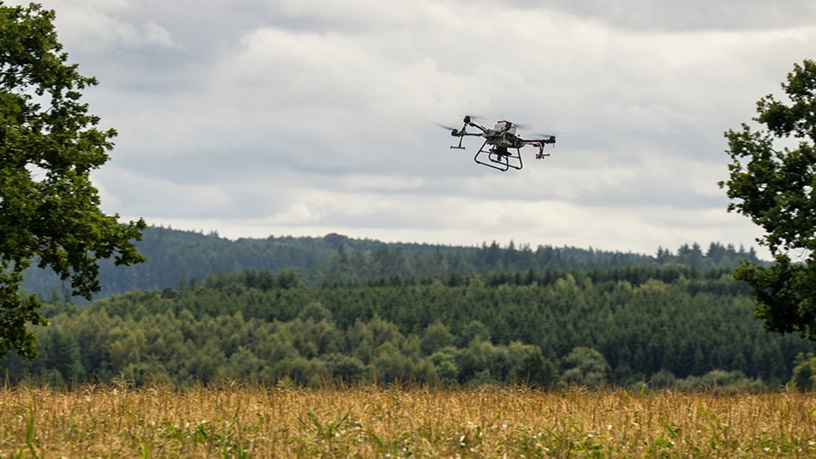
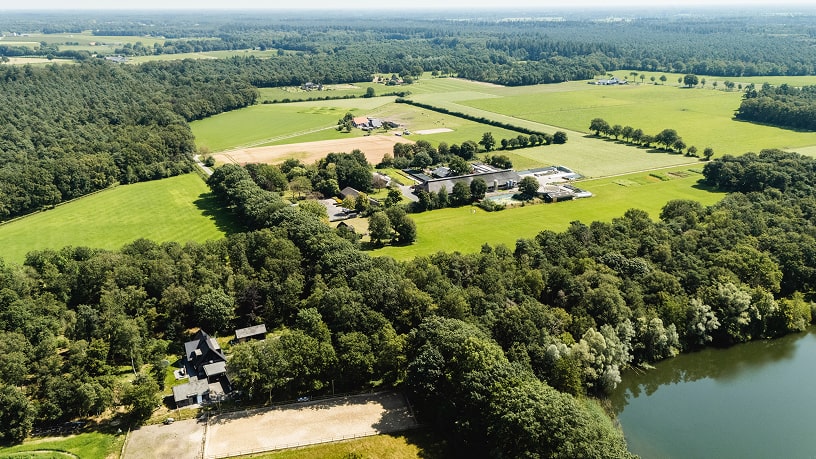
The facility includes a mechanical workshop, an extensive range of robot platforms and hardware (e.g., sensors) and a 200 m³ motion capture volume. A close collaboration with Università degli Studi di Milano allows AIRLab to test robot systems for agricultural applications in fields, orchards and greenhouses.
The cluster comprises 4 servers with 24 GPUs overall and a NAS. It is installed in a climate-controlled server room; power is distributed via industrial UPS units.
The small ruminants research barn at Raumberg-Gumpenstein is a flexible facility designed for in-depth studies on sheep and goats. It offers customisable compartments for various research setups, including feeding trials, performance testing, and carcass evaluation. Equipped with 360-degree video monitoring and weighing systems, the barn supports continuous behavioural tracking and health assessments, providing valuable insights into animal welfare and productivity.
The poultry research barn at Raumberg-Gumpenstein is a versatile research facility designed to conduct a variety of studies with both fattening poultry and laying hens. This multi-purpose barn can be adapted for different poultry types, making it suitable for a wide range of research applications. The barn is equipped with continuous video monitoring to track animal behaviour and a gas measurement system to monitor emissions during experiments.
The cattle research barn at Raumberg-Gumpenstein is a state-of-the-art facility designed to meet international research standards for cattle experimentation. The barn supports real-time data acquisition through sensors and cameras, ensuring precise measurement and observation of animal welfare, behaviour, and productivity. With dedicated spaces for calving, separation pens, and a high standard of hygiene, the infrastructure enables both basic and applied research in animal science.
The barn contains three identical compartments that can be customised for experimental setups. The barn supports video monitoring, feeding trials, and comprehensive animal welfare and environmental impact analysis.
In the mechanisation and automation workshop of the living lab Agrifood Technology of ILVO, technological prototypes for the agrifood sector are ideated, designed, developed, and tested in controlled conditions. An iterative development process is used; this is an agile approach with subsequent multiple cycles of (re)design and testing. Machines are designed in CAD software (Solidworks). For reverse engineering, a 3D scanner and post-processing software are used. For metalworking, lathes, milling machines, bending machines, and welding machines are available.