Digitalisation beyond the field: agrifoodTEF goes multilingual
1 October 2026
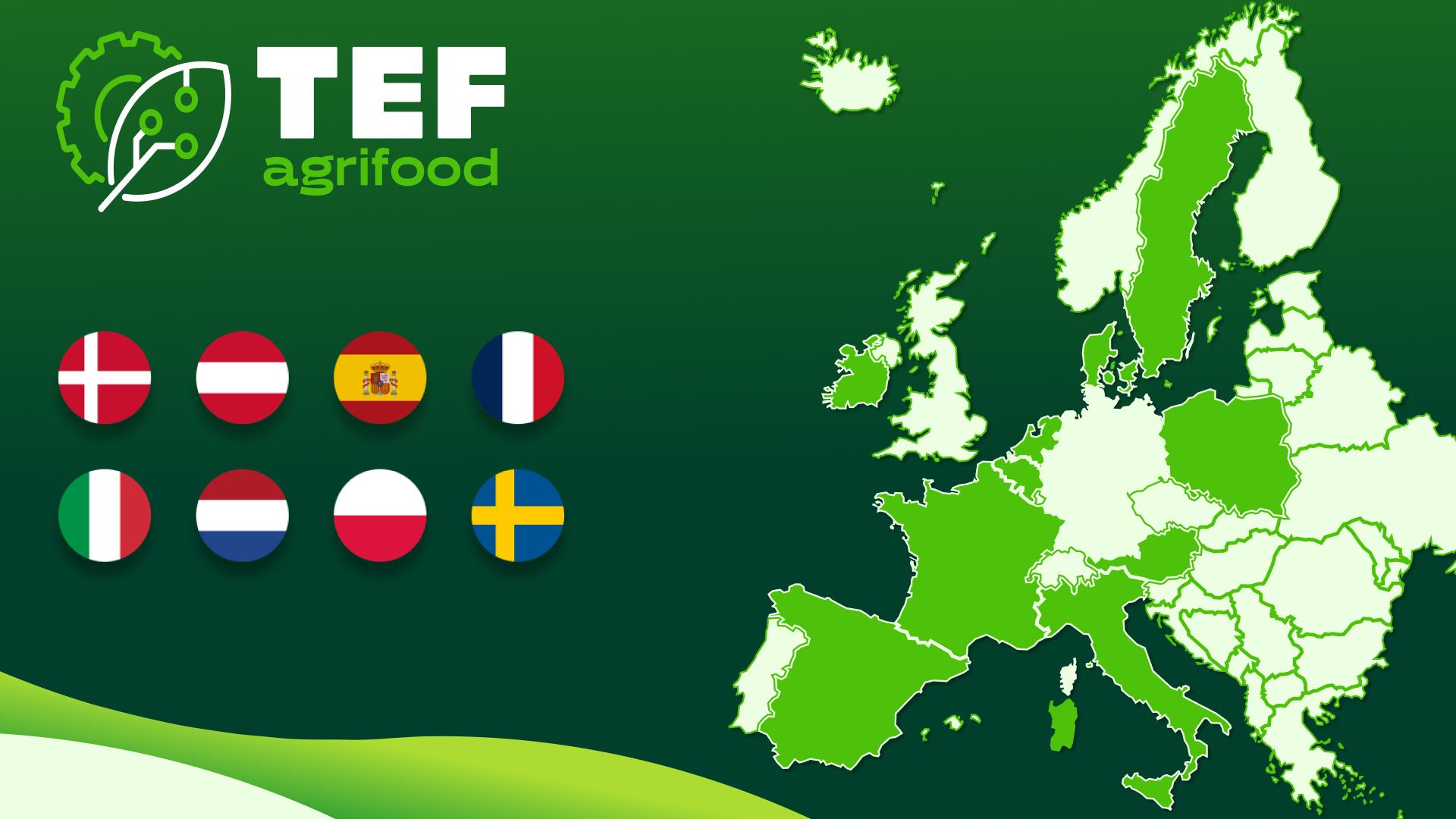
agrifoodTEF exists to help bring digitalisation to the agrifood sector, so it only felt right to bring a little of that same digital thinking to how we communicate, too. The website has just taken its first step towards becoming fully multilingual, with pages now available in Danish, Dutch, French, German, Italian, Polish, Spanish and Swedish, the languages of its Nodes.
This marks the initial version of agrifoodTEF's multilingual communications. As a European network built on collaboration across many countries, making our content accessible in the languages of the communities we work with has always been part of our ambition, and this launch is the first concrete step toward that goal.
Why now?
agrifoodTEF connects testing and experimentation facilities (TEFs), innovators, researchers and farmers across Europe, many of whom may naturally prefer to explore our services and resources in their own language rather than in English. As an EU-funded project under the Digital Europe Programme, using a tool built under that same programme was an easy decision to make.
Powered by WEB-T
To bring this to life, agrifoodTEF integrated WEB-T, a free, automated website translation solution developed by the European Commission under the Digital Europe Programme. WEB-T uses the Commission's eTranslation engine, the same machine translation technology used daily by translators across EU institutions, to translate website content quickly, securely, and at no cost.
Since agrifoodTEF is itself an EU-funded initiative, choosing an EU-built tool for this milestone reflects our commitment to transparency and to supporting the broader European digital ecosystem.
How it works in practice
You can switch between available languages using the language switcher at the top of the website.
Bear in mind that this website's multilingual pages are currently in their first version, generated through automatic (machine) translation. We have made every effort to ensure accuracy and consistency, and will continue to refine translations over time. The English version remains the reference text.
Since this is just the beginning, your experience with these translations genuinely matters to us. If you spot something worth flagging, good or bad, we'd love to hear about it through this short survey.
What's next
As we continue to refine translation quality and gather feedback, we plan to keep improving the accuracy and fluency of existing translations, and to expand language coverage further over time.